You brush twice a day, you use a fluoride toothpaste, and you see your dentist regularly. That’s enough, right? Not quite.
Brushing cleans the front, back, and chewing surfaces of your teeth, but it cannot reach the tight spaces between them. In fact, brushing alone leaves about 40% of your tooth surfaces untouched. Those untouched areas are where plaque builds up, gums become inflamed, and cavities often start.
Flossing is the only way to clean those hidden surfaces effectively. Yet many people skip it—either because they find it awkward, they’re unsure if they’re doing it right, or they’ve never been shown how.
This guide covers why flossing matters, how to do it correctly, and what alternatives exist if traditional floss isn’t working for you.
Your teeth have five surfaces. Brushing covers three: the front, the back, and the chewing surface. The two surfaces between teeth—where one tooth touches its neighbour—are left untouched by a toothbrush.
When plaque builds up in these areas, it triggers inflammation in the gums (gingivitis). Over time, that inflammation can progress to periodontitis, a more serious form of gum disease that affects the bone supporting your teeth. Cavities also commonly develop between teeth, often going unnoticed until they become large.
Flossing disrupts the biofilm between teeth and below the gumline. Without it, you’re leaving nearly half of your mouth’s surfaces vulnerable.
Using floss correctly makes all the difference. Incorrect flossing can be ineffective or even cause gum irritation. Here’s the proper technique.
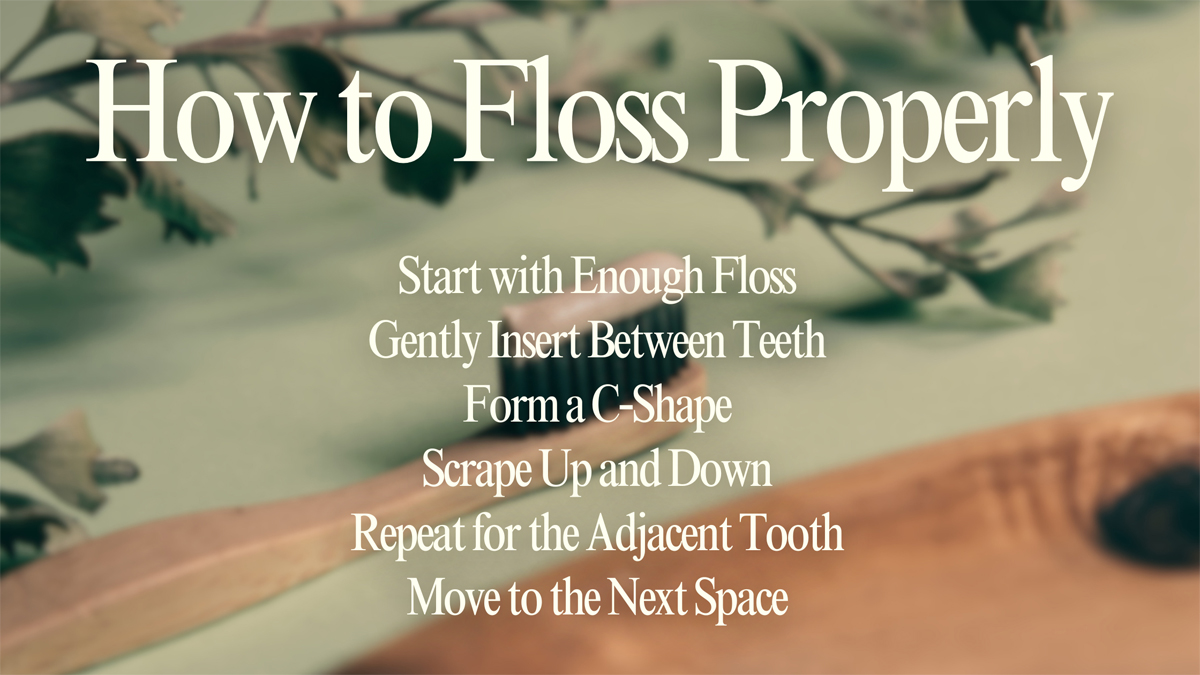
Break off about 40–45 cm of floss. Wind most of it around your middle fingers, leaving a few centimetres to work with. Your index fingers and thumbs will guide the floss.
Ease the floss between your teeth using a gentle back‑and‑forth motion. Never snap or force it down, as this can injure your gums.
Once the floss reaches the gumline, curve it into a C‑shape against one tooth. Gently slide it just below the gumline (about 1–2 mm) until you feel slight resistance. This is important: plaque collects in that shallow crevice, and you need to clean it without hurting the tissue.
Hold the floss tightly against the tooth and move it up and down several times, scraping the side of the tooth. This dislodges plaque.
Without removing the floss, curve it into a C‑shape against the neighbouring tooth and repeat the up‑and‑down motion.
Unwind a fresh section of floss from your fingers as you move to each new space. Using a clean segment prevents transferring bacteria from one gap to another.
Traditional string floss works well, but it’s not the only option. If you have dexterity challenges, braces, bridges, or simply find string floss difficult, there are effective alternatives.
These small, cone‑shaped brushes fit between teeth. They’re often easier to handle than floss and are highly effective at removing plaque. Your dentist or hygienist can help you choose the correct size.
A floss pick holds a short piece of floss taut on a plastic handle. It can be easier to reach back teeth, though you still need to ensure you’re forming a C‑shape around each tooth.
A water flosser uses a stream of water to flush out plaque and debris between teeth and below the gumline. It’s excellent for people with braces, bridges, or gum disease. Studies show water flossers can reduce bleeding and inflammation effectively when used correctly.
These flexible rubber picks can gently clean between teeth and massage gums. They’re a good option for people with wider gaps between teeth, but they may not fit tight contacts.
If you have braces or a fixed bridge, floss threaders help you guide floss under wires or between pontics (false teeth). Your dental team can show you how.
Flossing once a day is sufficient, as long as you do it thoroughly. The most important factor is consistency, not the time of day.
Some people prefer flossing at night so they go to bed with clean interdental spaces. Others floss in the morning or after lunch. If you floss at night, you remove the day’s plaque before it sits against your gums for hours.
The order doesn’t matter—you can floss before or after brushing. If you floss after brushing, you may want to avoid rinsing the toothpaste away immediately, as the fluoride needs time to work.
If your gums bleed when you floss, don’t stop. Bleeding usually means the gums are inflamed due to plaque buildup. Continuing to floss gently, along with thorough brushing, will remove the plaque, and the bleeding should subside within one to two weeks.
If bleeding persists despite consistent, gentle flossing, it’s worth having your dentist or oral health therapist to check for signs of gum disease or other contributing factors.
Flossing isn’t optional—it’s essential. Brushing alone misses 40% of your tooth surfaces, leaving plaque to build up between teeth and under the gumline. Proper flossing technique (C‑shape, going slightly below the gumline) removes that plaque and helps prevent cavities and gum disease.
If traditional floss doesn’t suit you, alternatives like interdental brushes, water flossers, or floss picks can be just as effective when used correctly. The best choice is the one you’ll use consistently.
Not sure if your flossing technique is working? At Dental Clinique in Hawthorn, we’re happy to show you the ropes. During a routine check‑up, our team can demonstrate proper technique, recommend tools suited to your needs, and check for any areas that need extra attention.
We welcome patients from across Melbourne’s eastern suburbs, including Kew, Camberwell, and Richmond.
Want to improve your flossing routine? Book a consultation at Dental Clinique today.
Book Online or call us on 03 9826 5515
This information is general in nature and does not constitute individual dental advice. Results and outcomes vary between individuals. Always consult with a qualified dental practitioner about your specific circumstances.
 Written by Dr Shivam Rishi, (DEN0002881205: Registered Dentist, General Registration)